Monday, 16 February 2009

reflection on safety gear for small animals

Having a look at an exhibition’s catalogue called “SAFE” I came across some brilliant designs and some others that made me think a little bit more critically about designers’ ethical responsibilities and how they are fulfilled. The products in SAFE where "designed to protect body and mind from dangerous or stressful circumstances, respond to emergencies, ensure clarity of information, and provide a sense of comfort and security"

I may be a little bit strict about design because I believe mainly in usefulness, but I do not exclude emotion from the list of useful aspects. I consider designers as some of the most creative professionals and I find it sad when talents go wasted by designing useless objects.

Practically I refer to the project “safety gear for small animals”, which is an example that has confused me. It is obvious that Bill Burns has done extensive research on the issue and after finding the problems those animals face decided to design something about it. He designed a range of tiny scale models of human safety gear based on the Victorian era’s theory about similarities between humans and animals.


What is the point? Well I guess it is a little bit funny, a little bit cute, but why did he have to lose time and money and waste materials for just a few shots? It is obvious the collection is not designed for use and I think it is a shame as a designer instead of creating something a little bit more useful that could actually offer a solution to the problem he wasted his creative mind for a few pictures.

On the other hand I feel like he didn’t lose his point completely. His collection triggered my curiosity so I visited his website, read his manifesto and learned a little bit more about endangered species and his work in general which aside the tiny safety gear is really interesting.

At the end of the day who is to decide what is useful and what not? If its aim is to inform and the message gets through then it served its purpose, I guess...


Antonelli Paola (2005) Safe:Design Takes on Risk, New York:MoMA
http://www.safetygearforsmallanimals.com/

Saturday, 14 February 2009

Artificial Nature

Dear everyone who has choosen Artificial Nature,

I do not own this picture but i think it might be a good starting point, what can we define as 'Artificial Nature'?


I haven't decided my topic on what to discuss yet but i though it would be a good idea to remind you guys that out post entries is between Feb 10 to March 3. I almost forgot but let's start talking. x

Desmond
wongwcd@hotmail.com

Monday, 26 January 2009

Friday, 25 April 2008

Art of Survival - Debunking Third World Myths

This entry was inspired by this video of Hans Rosling, talking about world economics but specifically in Africa. He uses data visualization software to really show what he is trying to get across to the audience – without the software I think his talks would not be nearly as informative. The point he is trying to make it that far from being an area of little to no development (which is what a shockingly large amount of people believe it to be) Africa, as a continent has come a long way from the ‘pre-medieval’ state it was in at before the 1900’s. He goes on to criticize lumping the whole continent together as one homogenous unit, but using the software shows that there is massive economic diversity in Africa, with countries in both the upper and lower percentiles of healthcare standards and GDP. He goes on to ‘prove’ that conditions across the continent will keep improving until they are at the place most of Europe/North America is at now. (This trend has already been observed in parts of South America).

So across Africa there is such diversity in conditions that for us to try and design for a whole continent is impossible, and ‘us’ designing for an individual community is inefficient. What the individual areas need is a self-instigated, self-governed system of some kind on behalf of the populace. This is what has already been observed, bringing some countries into the upper levels of ‘development’. With these sorts of systems in place the individual states within Africa are more than capable, and some have been able to, pull themselves out of economic strife.

http://youtube.com/watch?v=YpKbO6O3O3M

Wednesday, 23 April 2008

cosume your ethics

packaging and so_


I agree with 'jo', that designers in the food and other consumption industries could do better. Plastic bags are indeed a huge unnecessary waist in our regular shopping ceremony but compared to the avoidable packaging only a small part of the whole. Why are we still using so many plastic bottles when eco-friendly Tetra Pack could be used instead or why are disposable
batteries still in production when rechargeable ones are nearly as expensive. Why do we find vegetables like coconuts in a plastic packaging. Why do cables or earphones in Currys need a packaging that is more then ten times their size? This are Questions the consumers should ask the big superstores as they ask to avoid plastic bags in order to wash there faces green.

As Yuki affirms, it's not all about introducing paranoia and making costumers face global warming and the end of the world. Jamie Oliver for instance is shaping society showing gracefully how much fun and how quick it is to prepare food. A lot of ready made meals and their packaging would become useless if making your own food would become more popular.; . For the sake of quality we should be aware that pre-made meals, graded products and alimentary that is not in season has to deal with chemicals to make them last longer. For instance: I love Italian Pesto sauce, that contains graded parmigiana cheese, basil, olive oil and nuts; but dislike the ready made ones in the market as they contain chemicals to make the cheese and the nuts last. I would love to buy pre copped basil in olive oil (as most chefs store it in there kitchen) and chop the cheese and nuts my self, but it's impossible to find this simple mixture in the mall.

Designers instead of working on an other microwaveable dish could show the unessential need, the overload of preservatives and especially the over packaging of some products and introduce attractive alternatives as with the upcoming environmental awareness it's been realised that greener products are not necessarily bad for the market.


Futures


The Long Now_

In 01996 a small group of scientists, engineers, designers, and philosophers such as Danny Hillis and Alexander Rose founded the non profit Long Now Foundation.
The Name comes from an essay by Brian Eno where he describes the difficulty to solve long time problems such as global warming because human realities are based on a short now thinking that doesn't go ahead of generations or even only decades.
The Long Now Foundation tries to deal with the kind of problem that no other agency or institution has time and money to deal with as those problems go ahead of the time range they can make profit out of.


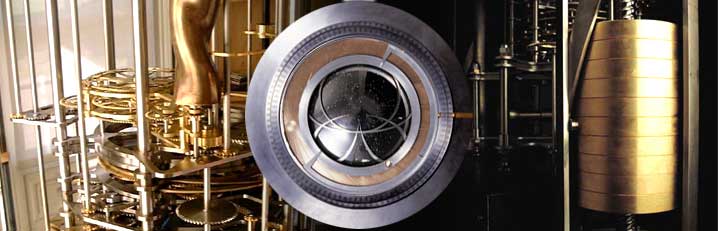
The 10 000 Year Clock is one of their projects.This clock is meant do work over next 10 000 years and it measures years instead of seconds and centuries instead of hours.
Their long time goal with this clock is to create a symbol of long time thinking, that can be visited by the coming generations like the Egyptian pyramids or the Eiffel Tower in Paris. The first prototype of the 10 000 Year Clock can be seen in the Science Museum in London. The foundation has just purchased land in Nevada where the 8 foot high final Clock, that ticks every year, bells every century and where thecuckoo comes out every millennium, will be placed.


The Rosetta Project is an other project and it's inspired by the 'rosetta stone' an Ancient Egypt artifact which helbed modern understanding in hieroglyphic writing.
One main issue for the Rosetta project is the rapid loss of languages in the world. The Projects aim is to collect as many languages and documentation on them as possible and store them in as many formats possible. They have already reached 2500 languages and their documentation and worked on side projects such as language labels for Google Earth, and in cooperation with the E.S.A. (European Space Agency), the launch of a the Rosetta disc into space to reach comet 67P/Churyumov- Gerasimenko in the year 2014. Alexander Rose underlines in an interview by Plan*B, the importance of Rosetta because of the fact that we are living in a 'Digital Dark Age', where the formant of files are constantly evolving and past formats aren't readable with new devices. He describes this with the quote: ‘If Leonardo Da Vinci were alive today, his notebooks would not be preserved for the future’.

Referance: Eternaly Yours, Time in Design, Ed van Hinte

Sunday, 20 April 2008

On the hedonic treadmill


At a time of global warming and a depletion of the earth's resources, it is only natural to ask why how and why we, the developed world, have contributed to this 'mess'. Our current modes of consumption are not only damaging the planet, they are also not making us any happier. Research is demonstrating that most citizens of the developed world are not more satisfied with life today than they were a few decades ago. During the last two generations, the rate of clinical depression in the United States has more than trippled (Lane 2000). The economist Richard Layard claims that the key factors in determining our satisfaction with life are the circumstances of our childhood, relationships and our outlook on life. Age, looks and intelligence make no difference on our level of happiness (Layard 2005). The key question remains: How is it possible that all the technological advancements and higher living standarts of the last decades have not brought further happiness? According to Oliver James, we are all infected with the 'Affluenza Virus' – we want things we don't need (James 2007). It is also argued that in our economy there is no such thing as 'enough', which leads to the assertion that our society is caught on a so-called 'hedonic treadmill' (Simms & Smith 2008). Anita Roddick, founder of The Body Shop, explained the notion of the 'hedonic treadmill': The consumer society keeps „everyone in perpetual infancy because, if they ever became satisfied with their material lives, they would cease to place the game of expanding desires that keeps the perpetual economy going." (Simms & Smith 2008). Clearly, this culture of disposability is failing to make us any happier.


James, O. (2007) Affluenza. London: Vermilion.

Lane, R.E. (2000) The Loss of Happiness in Market Democracies. New Haven and London: Yale University Press.

Layard, R. (2005) Happiness: Lessons from a New Science. London: Penguin.

Simms, A. & Smith, J. (2008) Do Good Lives Have to Cost the Earth? London: Constable.

photo: getty images

China - Renewable Energy

China is doing its bit to appear sustainable, they are currently operating 100,000 small Hydro Electrical Power (H.E.P) stations on rivers all over the country. Their greatest sustainable plant, the Three Gorges Dam, the largest Dam in the world and Chinas’ second largest construction, second to the great wall of china is due completion in 2009. It is estimated to generate 40% of Shanghais electricity using H.E.P from a one and a half mile damming system. The fundamental principal of sustainability and the use of renewable energy resources is that they “meet the needs of the present without compromising the ability of future generations”. Therefore Chinas dam appears a failure.


Dai Qing is a leading Chinese journalist and has investigated in depth the potential for the dam. This potential though, he does not deem positive. He describes the dam as a “political project that exhibits the folly of socialist economics.” Dai believes that because of the nature of the government there is no platform on which one can express objection or protest. Although the Dam has generated 20,000 jobs it will cost $5Billion and for 1million people to move from their homes and water source as their villages will soon be flooded and polluted. Protesters and those who have been known to voice complaints has received jail sentences from 3-7 years. They were convicted of disturbing the ‘Three Gorges Resettlement’ and many of such arrests have been reported to have infringed on The Human Rights Act (2004).

Although China has acknowledged the benefits of using renewable energy their decisions have been made for economic benefits and positive political perception. In 2000 it was estimated that 23.4 billion tons of sewage and industrial waste were strewn into the Yangtze. A large majority of this is a result of the construction of the supposedly environmentally ‘friendly’ dam. It is impossible to compare the benefits of clean energy production against the land, lives, areas of cultural importance, river pollution and wildlife that are being sacrificed for this ‘sustainable energy’ dam. Sustainability should not have to make compromises though, especially, when they are at the expense of social and ecological factors, the factors that are intended to be the priority.

Design for an Environment with Future


But what does this sentence mean? Let’s have a look at ecology and design, the words, and look at their meaning. Ecology means the “The study of the relations of living organisms to their environment” (Ernst Haeckel, 1866), in other words it means how everything is connected with each other. The ecology, the natural science, became the focus of different interests because of known environmental problems. It therefore helps to make political and economical decisions in our society and is no longer a natural science and/or world neutral. How everything is connected with each other… that means everything in this world, every act, every communication, every interaction in the world has a result on the whole system. Nothing exist separate from each other. Ecological design means firstly the realization of results of our own communication and our design performances in this world, and secondly expects you to play an active part in creating our environment, our living space. And do so by making sure to keep it (the environment) working for future generations to come. The task of communication designers is to explore different ways of dealing with the environment and social problems. Advertisings concepts such as from the German cosmetic company “Dove” show new ways of communication. It has to be discussed, which psychological and social effects a draft have. These are made visible on slogans like …, which have dramatic effects on the British economy. The provocation strategy of the 90s tried to be changed with a more human communication, in which also the advertising industry takes a social responsibility. The biggest challenge for designers in the 21st century is the development of products, which have no or only minimal effects on the environment. We should have this in mind design in this way.

style-files.com

pingmag.jp

Tuesday, 15 April 2008

Times of need are times of change.


It is very often that only in times of need is it that changes are made, changes that may have been needed for some time, but it is only when situations get critical that they actually come into action.


Food makes up for a massive sector of modern consumerism. A factor that is necessary, as we all need food to live. It is however the way the food is manufacture and distributed that is the major problem. ‘Each year an estimated 6.3 million tones of packaging comes into British homes’ [1] it is this packaging that is raising landfill across the country.  Manufacturers say that the food has to be packaged like this so that the produce is still fresh by the time it gets to the user, and as industrial methods are not local to its consumers this takes some time.


There are ways you can reduce the amount of this packaging that ends up in landfill that is by reusing and recycling.  ‘It’s more economical to put empty containers to another use’ [1] than it is to recycle them. By using contains and jars for storage, and then no energy has to be used to give them a new life.


Another way of reducing the amount of packaging is to reduce the amount of need, by this I mean move the production closer to the consumer. In wartime when people were in need, thousands of city gardens were turned into kitchen gardens, supplying the household with fresh fruit and vegetables with no need for transport or packaging, and at a much lower cost. If only people now could realize the benefits of growing ones one produce then maybe the mass market would decline. Masses of neglected space around cities could be put back to practical use, and people would realize that they are not as dependent on consumerism as they once thought.


AppleMark


Disused city garden. Peckham, London

Photo, my own.


(A soldier poses in his trench garden at Ploegsteert Wood in the Ypres Salient, the scene of many horrific battles. Photo courtesy of the Imperial War Museum.)


[1] http://www.bbc.co.uk/food/food_matters/packaging1.shtml


Image:

http://farm1.static.flickr.com/253/517090572_18a032e7d1_o.jpg


Sunday, 23 March 2008

Future Energy and Design Hypocircy


When talking about sustainable design it is inevitable that the conversation will lead to sustainable energy productions.
Wind farms, tidal and wave harvesters, solar power, geothermic energy and hydroelectricity technologies are being constantly developed.

Japan, the leading manufacturer of solar panel technology has developed spherical solar cells that are designed to absorb light from any angle. This solves the problem that conventional photovoltaic cells have in relying on the position of the sun.
Unless a motorised system that follows the path of the sun is used (which consumes energy) traditional solar panels only function well at certain times of the day. [1]

Architects are going to extraordinary lengths to make their buildings “eco-friendly”
The recently opened Terminal 5 at Heathrow boasts that it recycles rainwater and heat (although that will be little comfort to those that argue that it will encourage more flying which is of course not environmentally friendly). [2]

One of the most impressive buildings being developed that utilises eco-concepts is the as yet unnamed revolving tower designed by architect David Fisher


Each floor will be able to revolve 360° independently and all the energy the tower consumes will be produced by wind turbines between every floor.

In every field of engineering innovative ideas provide great leaps forward for sustainable design.
It’s a little disconcerting to think that countries like Dubai (itself only rich because of oil) can spend millions upon millions of pounds on creating revolving eco-buildings when 3rd world counties would benefit so much more from the innovation and creative thinking being directed towards them.
This imbalance though is seen all across the world. Al Gore won the Nobel Peace prize for his work in combating global warming yet he spends $30,000 a year on energy bills for his own home! [3]
The ethical question is then: If I have the creative means to do something am I obliged to do it?
To avoid the hypocrisy of “do as I say not as I do” we as designers must insure that no matter what we create we have to root the ideas in sustainability, whether that’s the packaging or the end-life of a product or the innovation of something completely new.


[1] http://www.worldchanging.com/archives/006018.html
[2] http://www.bbc.co.uk
[3] http://abclocal.go.com/ktrk/story?section=news/national_world&id=5072659

Thursday, 20 March 2008

Charity begins at home


CHARITY IS COMPLEX

Hell, helping a brother out of a scrape can't be a bad thing. But, like, as I'm sure anybody who's stuck around long enough to read these posts will have considered themselves - are we generally talking altruism or just a way to feel better about ourselves? (Another form of Inconsiderate-Lifestyle Offsetting.) OK, sure, I understand designing for what a designer might consider to be a problem is in a lot of respects different from donating money to Oxfam, but what exactly is it that a designer offers?


FISHING

I guess there's no use trying to avoid using this pathetic reference (but my apologies anyway): So if you give a man a fish and you feed him for a day, or you teach a man to fish and you feed him for a lifetime, the understanding is that you can rightly assume a teaching role on account of your possessing a skill (for example fishing) that 'a man' does not. And would benefit from learning.

Now maybe it's about time for me to put down the keyboard and ask myself, "Is it just me? Am I just easily offended?" but there are very few occasions where I've felt comfortable with the idea of one-way cross-cultural education, initiated by the educators. The thing is, whenever I as much as think about the crises we perceive the human race to be facing, I just can't help but feel patronising. Or preachy, or something. And that's before I've even considered designing an award-winning intervention.


THE OTHER 90%

Although, sure, the phrase itself is effective and to the point. (And the practical side can't be much worse than designing for the 10%, right? And dang, there do seem to be a lot of inspiring projects out there.) There's always this perpetuation of the distinction between roles that we/I don't seem to be able to move away from: the in group/out group. Designer/user. (Author/reader, blah blah/blah blah.) And even when people explain that 'we' have a lot to learn from 'them', it's always consciously in contrary to the assumed order, but never far enough away from those ideals.


US & THEM

What's the real difference between any two cultures in these situations? I cringe to type it, but maybe the difference between ourself and our underprivileged friends is purely financial. And from such a conclusion maybe teaching a man to fish, to contribute to his growing economy seems attractive. But from where I'm looking, money's a pretty strange thing. (Financial markets, currency rates - if the consequences of the whole game weren't so potentially damaging, I'd probably take Charlie Brooker's approach and describe it as a fantasy world.) On the flipside, whether a community are 'better off' the way they are (as opposed to having an outsider's assumptions of quality of life, etc., imposed onto them), or should avoid making the same mistakes Western cities and economies have seemingly made in their development, is probably not for an outsider to determine.


ONE LAPTOP PER CHILL-DUDE

I'm so undecided on this it hurts. I watched the TED Talk with Negroponte (the founder of OLPC) and the project made a little more sense afterwards (especially with his emphasis on it being an education project, not a laptop project - although, sure that brings up all sorts of new complexities). I find this whole 'one chill-dude pays, another chill-dude doesn't' set-up interesting. I guess it's kinda like the dole. Either way, with each chill-dude receiving the same product from the deal, if not ground breaking, it's certainly an interesting, if only moderate, variation to conventional models of charity. I wouldn't fully disagree that aesthetically the laptop itself could be deemed patronising, but at least as opposed to being aimed at adults of a different cultural background that the designer's made sweeping assumptions about, it is actually for children. And ultimately, probably the most attractive element of the project is that it's for children from the designers' own country and socio-economic background, too.

Maybe a step towards designing for

THE OTHER 100%

Sure, for it's age-group specific design, it's not fully 'inclusive', but I find this approach to design for similar groups in different countries, essentially including the designer's own, pretty interesting.


Michael

Wednesday, 19 March 2008

Can You Be 10 X The Designer

How can you as a designer do your job and still sleep at night?

Are designers going to have to be justifying themselves forever in the face of the relentless criticism that they design things in such a way that consumers are powerless to resist the entrancing properties of these ‘magical’ like designs?

Or will consumers one day face up to the fact that ‘their focus on consumption is a form of psychological junk food that in the long term makes them unhealthy’ (Professor Costanca, Department of Ecological Economics, University of Vermont) and let designers get on with the necessary job that they have to do.

The critics need to face facts. If tomorrow consumers were to stop consuming for want and were to start consuming for need only, the world’s population would still need a vast and increasing quantity of goods and services.

About half the world’s population lives on about two dollars a day or less. This doesn’t satisfy their most basic of needs. The world’s economic activity is forecast to have to grow by a factor of four over the next 40-50 years simply to move most of the people in the world to a reasonable standard of living.

The population is increasing and is forecast to grow by 50% over the next 40-50 years. Every baby born is, by necessity, another consumer.

Products wear out and break down. New products are designed not just to tempt consumers but because they legitimately do a job more effectively or efficiently.

The world will need more products and it will need new products.

At the same time designers need to face up to reality. The human race has taken over 75% of the Earth’s surface for it’s selfish demands. This is a planet that has to be shared with nature on an equal basis at the very least just to allow the planet’s ecosystems a fighting chance of survival.

In summary the world’s economy has to supply an additional three times more goods to one and half times more people using a third less resources than it does today. Put simply designers need to start designing about ten times better than they do today.


It seems like an impossible task. However, if it is broken down into steps, great improvements may be possible. Take a hypothetical product and start this redesign and reengineering process. (Tefal improved energy efficiency by 68%  with this new kettle design. It may not be attractive but it is effective.)

Source more of the raw materials from environmentally friendly resources (reducing impact by half say) giving an improvement of multiple 2.

Innovatively redesign the product so it does the same or a better job with half the materials and /or processes (giving an improvement of multiple 2).

Make the product run twice as efficiently by installing the best technology available and avoiding wasteful extras (like stand by switches). Tick the multiple 2 box again.

Engineer the product for long-term durability and repairability using the latest engineering analysis techniques doubling the products life span (*2).

Ensure that the product is recyclable so it can be used again (*2).

The hypothetical product is now 32 (2*2*2*2*2) times better designed than when the redesign/reengineering process began.

In fact being a ‘ten times’ better designer can be achieved with as little as roughly 50% improvements at each stage of the design and engineering process. This process of cumulative improvements will ensure that design has a valuable role in a sustainable society and may help make the planet a better place for future generations. 

References.

Geographic, demographic and economic stats are from

Planet Earth - The Future BBC 4  26/11/06 - 10/12/06

Image www.tefal.co.uk

A Modern Fable


The sentence that struck me most as I waded through the text of Rosenberg and Harding’s ‘Histories of the Future’, was…


Of course, these future narratives were also morality tales for the present, but in them the present is materialized through striking kinds of proleptic imagining.

When we look back through our movie archive we can see that this is an accurate observation, even when with every day that passes our possible futures edge closer and closer but seem fewer and fewer.1984 and 2001 were once iconic dates, inspired by visionary books like Orwell’s ‘1984’ and Clarke’s, ‘2001’, A Space Odyssey (and the film versions by Radford and Kubrick respectively) but they now just seem like the dates off of some old calendars discarded in the loft. The concerns of the last century have passed and the moralistic future tales have passed with them.

The nuclear Armageddon of the cold war inspired ‘Planet of the Apes’, the eerie beauty of dystopian ‘Blade Runner’ where man and machine can find true love (while all who can afford it move off the planet), the post modern nihilism of Spielberg’s ‘Artificial Intelligence’ back dropped by a post global warming New York and subsequent ice age, and many more, all now form part of our history of possible futures.


I expect we will see some director’s vision of an artificial urban dystopia where most of the human race has retreated to a network of protective ‘mega-domes’. This will be contrasted with a vision of rural utopia where small bands of hardy but innovative pioneers live in harmony with the land. The interesting thing will be to see just what Hollywood thinks the ‘right’ ending should be.

References

Rosenberg, D. & Harding, S. 2005 Histories of the Future Duke University Press, Durham / London.

Images in order.

‘2001, A Space Odyssey’ http://lookingcloser.org/movie%20reviews/numbertitles/2001.htm

‘Blade Runner,’ www.cyberpunkreview.com/. ../blade-runner/

‘Little House on the Prairie’, http://www.allposters.com/-sp/Little-House-on-the-Prairie-Posters_i275318_.htm

‘Logan’s Run’, http://www.wetcircuit.com/tag/thief-assassin-spy/page/2/


Rather ironically, the positive aspects of urbanization as mentioned in wikipedia is so,"Urbanization is often viewed as a negative trend, but in fact, it occurs naturally from individual and corporate efforts to reduce expense in commuting and transportation while improving opportunities for jobs, education, housing, and transportation. Living in cities permits individuals and families to take advantage of the opportunities of proximity, diversity, and marketplace competition."

This reinforces the statement made by Anna Tibaijuka, executive director of the UN Habitat agency, "People move to the cities not because they will be better off but because they expect to be better off."

The population of people living in slums is increasing rapidly, reaching a predicted high of 6 billion in 2050(2/3 of total human population).

Urbanization offers the illusion of a better life- of mass consumption, of material comfort, of a stable future. Designers are in a dilemma here: whether they should inform people that it is only the illusion of a better life that is offered, or help to make the illusion a reality?

References

http://en.wikipedia.org/wiki/Urbanization

http://news.bbc.co.uk/1/hi/in_depth/5078654.stm

image courtesy of Vladimir Menkov, an author of wikipedia

Tuesday, 18 March 2008

The transformation of objects into symbols

It is interesting how items can be connected with certain styles of life, and usable as a tool to judge a person before even knowing them. This concept is important to companies when it is coupled with the knowledge that everyone aspires to achieve personal goals and climb the social ladder.

Linking an object to a specific user group by way of advertising is a powerful way of grounding it, and making it desirable too. Of course designers want their products to be valued, and by getting the attention of the right people they can quickly become of interest to others too. Using celebrities to endorse products makes their admirers latch onto logos and objects and see them as something to aim for, as they associate them with success and luxury.

Market research in the same vein, performed and documented by Louis Cheskin noted- “one girl, when she first saw the stylish chantreuse dress commented that ‘the colour makes me want to vomit’. Yet when she was reminded that it was the latest style in colour she finally ended up buying it!”

It is obviously powerful, and something that works backwards too. Creating a product that is perceived as elite because it is priced in a way such that it excludes the majority of people from affording it is a surprisingly underhand tactic companies use to great success, giving their products a certain chic. People relate price to quality, and dream about being able to afford things usually well outside of their price range. This would aim to make people buy the company’s other products because of their reputation.