Tuesday, 19 February 2008

NO EXIT:ECOLOGICAL LIMITS AND CLIMATE CHANGE


Shell’s two year tenure as sponsor of the Natural History Museum’s
‘Wildlife Photographer of the Year’ exhibition has come to an end.[1]


“Climate Change - Shell’s role in one of the biggest threats to biodiversity as one of the world’s major oil companies, Shell has a significant role in causing - and therefore responsibility for - man-made climate change”[2]


The role of Art as a way to draw importance of the issues concerning the Natural World is a very significant thing. Although I question in which way institutions are becoming hybrid platforms on advertising Climate change related statements? Those statements are coming from companies of a dubious activity, such as fossil fuel extraction (oil companies)?

  How can we openly asses the problem of trying to make society think differently about stories like the Wildlife Exhibition?    As a cause and effect Art as a cultural vision opens up new worlds and perceptions, but it can not in the long term be held by companies that manifested activities are opposed to the topic exposed.

            Consider for example the real natural damage those oil extractions have for the environment?            

They sponsored Wild Live Photography exhibition; Sponsor is a funny word for a context that means to support.


  What topic in Art in relation to Climate change could an oil company held for example? Renewable energies, new material coming from “Petrol”, but sure there are many topics good enough in which they could participate and attempt to manifest their interest for cultural sponsorship.


[1] http://www.artnotoil.org.uk//content/view/21/

[2] http://www.artnotoil.org.uk//content/view/21/

No Exit: Ecological Limits and Climate Change.


“Ice caps melting”, “CO2 levels causing global temperature rise”, “In the last decade or so we have really started seeing our world as being on the brink of destruction due to everyday human activity and its impacts on climate and ecological change” [1]

These are all phrases with which we are now completely familiar with and I doubt there is a single person in the developed world who is not aware of global warming issues whether or not they believe in them. I’m not going to name any of the statistics or arguments for or against, as I am sure you are all aware of most of them.

The sad truth of the matter is that many people become desensitized to issues when they are repeatedly bombarded with them no matter how serious those issues are. As Jo points out in a previous entry “Apparently 53% of the public press is sceptical about the issue of climate change and global warming, whether they’re talking about the exact effects, the timescale or the magnitude of the causes.”
A nail in the coffin for all those stragglers who are still not sure whether or not to take action is aptly provided by Greg Craven. See the video below.
He argues the case of risk management. We are already in the ‘test tube’ of the global warming experiment there is no exit. Even if we are not the cause of global warming the risk of the consequences that arrive with inaction far outweigh any of the risks of action.

The problem we face now is not just asking what we can do to stop global warming but what can we do to change peoples attitudes. At the moment I live with three other people and we all try and take responsibility in keeping the place tidy (to varying degrees of success!) When living with more people though I know it is very easy to assume or hope that somebody else will take responsibility as it becomes harder to identify who created what mess.
Obviously equating the state of the planet to the state of my washing up is a gross exaggeration but it serves to make a point! Apathy can be a vary dangerous thing.
People generally don’t like to be guilted into doing things or told what to do. For action against climate change to really succeed we need to somehow change peoples perceptions so that ‘the greener way’ is not a chore but rather the more natural and easier way.

[1] - Dave
Image - 'earth is da bomb' found on Google images

No Exit: Ecological Limits and Climate Change


In the last decade or so we have really started seeing our world as being on the brink of destruction due to everyday human activity and its impacts on climate and ecological change. As a result, a large portion of our world today is seriously focused on going green in attempts to slow or even reverse the negative effects we have burden our environment with. The most obvious influence is the emissions produced by automobiles that are polluting our environment daily. Conversely, we are also developing and producing more and more eco-friendly fuel-efficient hybrid vehicles in an effort to stall total destruction of the environment. Hybrid cars are obviously not the sole answer to our problems, however they are a large piece to the puzzle.

 “Maintaining a sustainable context for human development is not only a political, scientific, technical or funding problem. It is fundamentally a cultural problem that requires reorienting human development and the built environment; artists have an important role to play not only in creating new cultural contexts, but also changing the way that science is done. (1)” Though retooling the entire world is an enormous task that would most likely take decades to complete, it is not impossible or impractical. This insurmountable task is in fact obtainable and hybrid cars are proof. We are obviously strides to revamp culture the green way, and hybrids are a good start. If hybrids are sustainable designs, then hopefully every car on the road will be more fuel-efficient and eco-friendly someday in the distant future.

 The role of artists and designers in the scientific community has become much clearer to me because of hybrid cars. Poorly designed cars usually do not sell very well, obviously. That is why transforming existing and successful car models into hybrids seems to have been the most effective design solution: if it ain’t broken… I think that this is very encouraging for designers and for our environment. Though there are still questions on the costs of designing hybrids…

 It is a fact that going green also means spending a bit more of green. Well, no one said saving the environment would be cheap. So obviously if you are someone who is a bit more economically minded, hybrids are not the answer for you...however, there are alternatives! For example, the Volkswagen Jetta TDI is a diesel-powered sedan that sells for about $2,500 more than the gasoline-powered version, yet it achieves 50% better economy (2). In actuality diesel fuel economy is less fragile than that of hybrids because driving style affects them much less. Additionally, several more "clean" diesels, built to take advantage of low-sulfur fuel, have been produced in the past few years and have proved to be rather effective thus far.

 So if you straight up cannot afford a hybrid, there are several fuel-efficient alternatives: ride the bus, ride a bike, WALK, buy a clean diesel vehicle, etc. If all else fails, recycle, recycle, recycle, and eventually everything will be fine... right?


(1) Roger Malina. ‘Lovely Weather: Asking What the Arts Can Do for the Sciences,’ in Ecomedia (Edith Russ Site for Media Art, 2007).

(2) http://moneycentral.msn.com/content/Savinganddebt/Saveonacar/P37272.asp

Monday, 18 February 2008

No Exit: Ecological Limits and Climate Change


During Marco Polo’s travels in the 13th Century he came across a village in China which made a kind of porcelain requiring it to be left to mature for 40 years. The people who dug the clay did so for the next generation, not themselves. This kind of long term thinking seems alien to much of modern western society. The short term view reaches into all areas of life and many areas of design ethics such as natural conservation, futures and most salient, climate change.

Although the scientific evidence on climate change is not conclusive, there are few in the scientific community who disagree that CO2 emissions lead to global warming. The prevailing issue about climate change is that people either do not think about or do not understand the effects of their actions in the long term.


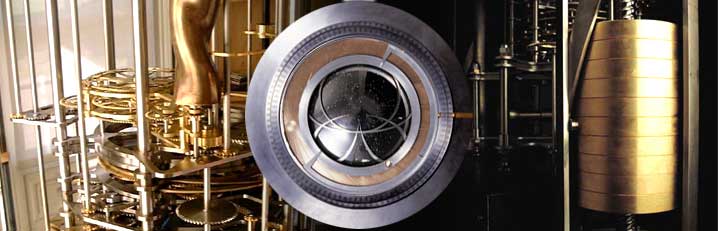
How would a designer tackle the problem of trying to make people think in a larger time frame? One solution is the Clock of the Long Now, currently housed in the London Science Museum. Designed to run for 10,000 years, it ticks once per year, bongs once a century and cuckoos once every millennium. Not only does it perform the task of getting people to think about the longer term by contrasting the 12 hour timescale of a normal clock with a period far longer than we would normally consider, but also tries to enter the conscious of the viewer by creating myth and event. The clock is supposed to be a continuous reminder that the world will not end when we die, and perhaps a desire to protect the clock can trigger an urge to protect the earth as a whole for the people of the future.

www.longnow.org
Hinte, E. Eternally yours: Time in Design 2004

No Exit: Ecological Limits and Climate Change

We look at our world at the brink of destruction caused by human activity and its influence on our climate and ecological change. Greenhouse gas emissions come from natural resources and of course human activity. Cutting down of fossil fuels seems to be an obvious answer to help reduce these emissions into our atmosphere, but why such a slow movement to do so? In what way can this be done?

Wind Power. Wind power is the conversion of wind energy to some sort of useful form such as electricity. Cutting the use of fossil fuels to create electricity greatly reduces greenhouse gas emissions and is clean, widely available, plentiful and renewable.

Wind power enables energy and electricity to be produced in a way that is not going to harm the environment or contribute to the devastation of the atmosphere.


However, there are some disadvantages and concerns involving wind power. One of the most prominent of these concerns is that the landscape seems to be ruined in the eyes of some. Wind farms tend to be quite large and take up a lot of space, but the land the wind farms are set on is nearly undisturbed. This land is still readily usable for agricultural reasons or for any other purpose really.

Originally, the costs of a wind farm was great but has since dropped significantly and will continue to drop as the number of wind farms increases. Yet another big concern is with the noise. The sound that is generated from the windmills is constantly up for debate amongst residents living near the wind farms. That's right. There is a hesitation for wind farms and a possibly cleaner environment and more stable atmosphere due to the noise.

It seems quite problematic that we're in a world that is more accepting of the idea of our climate and environment being at the brink of havoc from our own activity, than one that is willing to compromise the slightly bothersome noise created from a wind turbine. A system that is put in place to help our environment and hopefully cut back the destruction that is being created by our affairs.

NO EXIT: Ecological Limits and Climate Change


Although it is impossible to prove the link between climate change and ecological structures, because of non-climatic effects influence local, short-term biological changes, the earth average temperature has increased by 0.5° Celsius in the last 100 years.
This change had an affect on over 1700 species, moved the poles an average of 6.1 km per decade and moved spring 2.3 days forward in the last decade. The structure and functioning of ecosystems are in danger and it is highly possible that climate change has already affected living systems.

Therefore: What does alter the earth’s climate?

“Any factor which alters the radiation received from the sun or lost to space, or which alters the redistribution of energy within the atmosphere, and between the atmosphere, land and ocean, can affect climate.”
By the increase of greenhouse gases the ability of the earth to cool itself is reduced. Therefore the temperature on earth increases. This is the so-called “Greenhouse enhanced effect”, which means that, it is the result of the emission of carbon dioxide, water vapor, ozone, methane and nitrous oxide. The warming of the atmosphere is related to the emission of greenhouse gases.
Anthropogenic particles in the stratosphere reflect and absorb solar radiation and therefore decrease the greenhouse effect. These anthropogenic particles develop from the emission of sulphur dioxide, which comes from fossil fuel burning. (Sulphur dioxide shooting ship) Aerosol concentrations, which are transformed into sulphur dioxide, can change the size and number of clouds and so cool the atmosphere and produce a negative radiative forcing.
Large amounts of aerosol concentrations are released by volcanic activity.

Although the energy level of the sun varies, any change in the atmosphere triggered by for example the increase of greenhouse gases will eventually have an effect on climate change. For example cloud distribution, changes in rainfall, temperatures of atmosphere and oceans. Ecological systems will be affected over time.

Climate Change 1995: The Science of Climate Change By John Theodore Houghton
http://www.nature.com/nature/journal/v421/n6918/abs/nature01286.html
http://www.blackwell-synergy.com/doi/abs/10.1046/j.1523-1739.2001.015002320.x

No Exit: Ecological limits and Climate Change


October 6, 2007, marked the year’s Ecological Debt Day. Ecological Debt Day marks the point in the year where we have consumed over our annual sustainable ‘allowance’ of resources for that year. Similar to that of a bank account, if you spend / consume too much it will lead to debt. Unlike a bank account though, the environment has no single person who can be held responsible or forced manage the debt. Ecological Debt Day is to become an annual mark based on the same criteria for explaining, measuring and advertising our increasing consumption of endogenous resources.

This measure of ecological debt unlike our actual ecological debt is reset each year. This is because we accept it is very unlikely we will ever be able to repair the damage or renew the wasted recourses from the past. By marking the day in which we have over consumed the policy aims to attract people to assess and revise their consumption. We are currently consuming in our ‘over draught’ for approximately the last ¼ of the year (3 months). This means a large intervention must occur in order to change or debt pattern.

Imagine the difficulty of driving ¼ less, using your heating ¼ less or traveling ¼ less. It would be a sacrifice, but this appears to be the obvious solution to our crisis. Although our contribution is valid, the problem is globally. Should a whole nation such as the UK achieve this target we would still be globally consuming and emitting an increasing amount each year. As the GEO4 explains, “with an ever increasing population the amount of resources needed to sustain it exceeds what is available.”

Developing countries such as China and India, with populations over 1 billion are some of the worlds most polluting regions. This is not only a result of their high population but, a result of their development rate and industrialisation process. Therefore we are seemingly forced with a compromise; restrict financial and social development by decreasing industrial growth rates or sacrifice our resources and environment for a better global economy. The solution though must be finding ways to live sustainably now before all endogenous resources such as oil run out and we are faced with social, political and economical disasters.

No Exit: Ecological Limits and Climate Change


Much of the Global consumer industry is controlled by a few, giant corporations. As long as this continues to happen, it seems likely that goods will be imported, exported, packaged, and transported globally, with a hugely negative impact on the environment. It is simply cheaper and easier for the companies involved. Refusal to buy into certain brands is obviously better than ignoring the problem, but goes little way to solve it, and without abstaining from consumerism altogether, is very hard to do.

Being self sufficient to some extent is the simplest, and most obvious way of combating globalization. Caroline Lucas, (Green Party Member of the European Parliament) suggests in ‘Green Alternatives to Globalization: A Manifesto’ that the way forward is localization of economies, and minimal global trade. This does not have to mean a move towards socialism, but simply a less aggressive, more localized capitalism. Britain, the West, and intrinsically, the entire world, seems to be embroiled in the system of buy and sell, controlled by corporations that seem unlikely to relinquish control. The ecological methods of the West require a complete overhaul, a radical change of society, in order to sustainable change the effect we are having on the environment. In the current economic and political climate, one wonders how easy this would be. The chances of a political party putting forward a radical change of any kind purely to benefit the environment are slim. The chances of a party being voted in, if they did so, even slimmer.

Perhaps, therefore, the tools for change lie with the individual. Leading environmentalist George Monbiot, who runs the student activist community ‘People and Planet’ suggests an individual limit on carbon emissions, in a similar way to the Kyoto protocol, only on an individual basis. Maybe campaigning needs to be more responsible, not only advertising how to offset carbon emissions, but how to begin the reverse of globalization, and all its negative effects.

Campaign for a change of climate law:
http://www.thebigask.com/campaigns/climate/big_ask/march_about_climate.html

Student environmental activist community:
http://peopleandplanet.org/

Sunday, 17 February 2008

From the time we realised we could create energy through combustion, humans have divided themselves from all other animals. We alone, have the power to be discordant to nature herself. As the years have progressed the gap has only become larger, from combustion to mass production the effect on nature has been evident. We have reached the stage where no small gesture will suffice, where recycling and re-use can no longer be our slogan. Now is the time for drastic action… but who has the power to lead us in the creation of a new system of living? Is it the politicians who hold the power?

Will we be saved by “the so-called Clear Skies Initiative” proposed by George W Bush which completely ignores “emissions of carbon dioxide…not included in the Clear Skies plan.”

(http://pubs.acs.org/cen/topstory/8129/8129notw3.html)

Or perhaps “Reach - the EU'groundbreaking Registration, Evaluation and Authorisation of Chemicals system” which aimed to “to register and test as many chemicals as possible and to eliminate the use of those found to be the most dangerous,” however “when … presented [at the European commission] … it was a shadow of its former self - watered down by relentless industry and political lobbying.”

(http://www.guardian.co.uk/society/2003/nov/05/environment.greenpolitics.)

Three years ago we all had our hopes pinned on the “Kyoto Protocol.” However “most climate scientists say that the targets set in the Kyoto Protocol are merely scratching the surface of the problem. The agreement aims to reduce emissions from industrialised nations only by around 5%, whereas the consensus among many climate scientists is that in order to avoid the worst consequences of global warming, emissions cuts in the order of 60% across the board are needed.” (http://news.bbc.co.uk/1/hi/sci/tech/4269921.stm)

The problem is that each of these systems has been proven to be profit or vote driven and ecologically flawed. They start out as noble ventures but at the end of the day, who runs this planet? Is it government or commerce?


CONSUME YOUR ETHICS


“ There are professions more harmful than industrial design, but only a very few of them. And probably only one profession is phonier. Advertising design, to persuade people to buy things they don’t need, with money they don’t have in order to impress people that don’t care”
Victor Papanek


So how did we become a world dependent on material goods for happiness?
Well…I looked into this and came across some interesting facts on how we have made consumerism a way of life.
Consumption is at the heart of the economy. Without it, it would crumble.
So in order to keep the economy afloat there has been designed strategies to do just that.

Consumption as a way of life…didn’t just happen. It was no natural progression that we now consume twice as much as we did 50 yrs ago. It was designed.
This designed strategy can be traced back to after the end of the Second World War.
Victor Lebow, a retail analyst, designed a strategy to ramp up the US economy after the war. He said, “Our enormously productive economy . . . demands that we make consumption our way of life, that we convert the buying and use of goods into rituals, that we seek our spiritual satisfaction, our ego satisfaction, in consumption . . . we need things consumed, burned up, replaced and discarded at an ever-accelerating rate.” *
This has become the norm for most economies today.

So how was this solution designed into our everyday lives?
I am aware that we have discussed this in a previous lecture, but I feel it of great importance to reiterate on these points.
The strategies implemented are “planned obsolescence” and “perceived obsolescence”. “Planned obsolescence” being that of goods being designed with a specific lifespan and “perceived obsolescence” is down to the media and advertising, which advertises the new look of a product, making your perfectly good product loose value.*

When it comes to recycling and being more of a conscientious consumer, I often ask myself why it is that you never see adverts to simply consume less. That by doing this, you will have more money to enjoy other things and possibly be able to work less and enjoy life on the whole a lot more.
Are we not just jumping onto another wagon that makes us again, feel better with ourselves by consuming more fair trade, recycled, eco-friendly products? We already have all the products we need…why buy another just because it’s under the eco-friendly label?

Even if we do recycle, that only amounts to a small portion of the waste produced worldwide. One rubbish bin that we put out equals 70 rubbish bins of waste produced to manufacture that bin you just put out!!*
The solution is not recycling. It’s simply consuming less.
But how do we consume less when we are targeted with an average of 3000 adverts a day *, telling us that we are not good enough, not good looking enough and that we need the cheap clothes from Primark to make ourselves feel good and happy?

Another interesting fact or coincidence is that we own double the amount of things than we did in the 1950’s, but polls show that our national happiness is actually declining and that it’s peek was sometime in the 1950s -the same time consumption started to boom and to become a way of life.*


What we need is fewer adverts on recycling, more on less consumption and more information on how to have a better and fuller life. I also understand that this is a Utopian vision…but a vision I would like to believe in for now.


* www.storyofstuff.com
Design for the Real World, Victor Papanek

Image:
www.celsias.com

Wednesday, 13 February 2008


Rubbish recycling proposals for household

From a consumer point of view we all know how to basically recycle an dispose waste. 

That we all do it?.....It might overcome from a personal point of view, how ethical we are, for instance, about our consumerism ethos.

The way we consume goods, food for example, and how informative is this practice regarding its recycling time line is not known or even better, automatically remembered. We could ask ourselves. How long will all those materials take to biodegrade? And as such seems that we as individuals do not really recall where does it goes after have been used.

The answer does not really come entirely from the consumers, neither from the providers (the shops), but from the producers? 

The product comes packed with some information about what kind of material this is, which class of plastic that is that you carrying home, its safe & health basic information, that is all.

But again, how bad for consumption would be if in any case information such as “70% of the rain forest of the world is extinguishing”…”Paper pack such as the one you carrying comes from there”, etc… 

Therefore the main question is how us (the individuals, the consumers, one in many, etc…) redefine at this precise moment our waste against what is brought the big mechanistic production of goods from Corporations; that nevertheless do set what are our needs and wants. As far as it gets the bringing of goods into society as “bold” need, we all know things are not process and packed to be fully recycled, and so far it depends partly of the consumers to understand the place we occupy in this recycling timeline.

On the other hand Institutions such as Councils can draw ethical approaches to this Notion of Healthy & Ethical waste disposal. 

I am drawn by this idea of change that comes from a joined together practice and change from the inside how we wonder the world to be seen. 

Panic Buttons

As an aspiring designer I panic about not getting enough done. I got this time management book called “Eat That Frog”. The author, Brian Tracey, says “there will always be more to do, than you can ever accomplish in the time you are given”.

So to combat this he suggests you should tackle the hardest, nastiest task (which are nearly always the ones which will have the most positive impact on your life compared to other tasks) and complete it first before any other. This is ‘eating your frog’. It plays on the old adage that if you eat a live frog when you wake up you will have the satisfaction of knowing it will probably be the worst thing you will do that day.

This is from an exhibition called Pop Noir- critical designs selected by Dunne and Raby:

“With Life Counter, you choose how many years you would like to or expect to live and start the counter. Once activated, it counts down the selected time span at four different rates: the number of years, days, hours, or seconds to go are shown on different faces. Depending on which face you choose to display, you may feel very relaxed as the years stretch out ahead or begin to panic as you see your life speed away before your eyes”

This is loads easier to understand and relate to as a useful panic button when compared to the Doomsday clock. The clock goes back and forth and feels confusing as much as anything else. This teetering on he brink without any kind of suggestions does nothing to create panic or action but seems a chance to procrastinate or be apathetic.

Perhaps we should embrace a final time. If there were a date for the end of humanity (human set or otherwise predicted) then we could accept our inability to affect nuclear holocaust or similar and better manage the time we have now to best complete our tasks and goals. And if the continuation of the species became unimportant what would be the biggest most important tasks for us- as a race and as people. What would be the frog that we would eat?

Tracey, B. (2004) Eat That Frog, London: Hodden and Stoughton
http://www.imj.org.il/eng/exhibitions/2005/design_for_thought/pop/popnoir.html#

Tuesday, 12 February 2008

Doomed?

Fear is used as a means of affecting people's opinions and actions. Politicians, religious leaders and artists try to alter our behaviour by inducing panic. For example, religious leaders may threaten punishment if people do not change their ways. Politicians have scared us into supporting wars by citing the potential for disaster that nuclear armourment posesses. Arguably, both of these examples have resulted in marked change. Soldiers have signed up for military service and many people have been compelled to lead religious lives.

The Doomsday Clock, a campaign designed by Pentagram in collaboration with the Bulletin of Atomic Scientists, may have aimed to change people's behaviour through panic. But does an image of a ticking clock together with emotive imagery really achieve anything? I think it fails to provide explicit solutions to the problems it identifies.

Fear is malleable. Political activists, religious leaders and artists have the ability to design 'panic buttons' which they press in order to encourage us to modify our behavior. This is a very powerful tool which, when used positively, could potentially achieve very noble objectives. Perhaps showing graphic films depicting pedestrians being struck by cars will encourage drivers to reduce their speed. However, there is also potential for fear to be used as a means to achieve more questionable objectives. We, as human beings, can lose the ability to remain objective under the influence of fear. This leaves us open for exploitation, questioning the ethics of 'panic buttons'.

Designing Panic Buttons


In designing panic buttons there are some issues that cannot be addressed successfully, the most significant is the poverty and oppression inflicted on workers of factories in developing countries. They work in an industry that between 2002 to 2007 has risen to £6.3bn and by 2012 the industry is predicted to be worth a record £8.7bn. An industry worth so much should be paying its garment workers more than an hours pay that is as little as 13p, in a working week that is 48hours long. An hourly rate so low that the Indian factory workers who receive these wages have to sometimes rely on state food packages to survive as their wages are not enough to buy food to feed their families.

An area that the design of panic buttons has worked in, is the much more fashionable area of the environment. One victory for sustaining the environment as it is recently has been “Some of the biggest names in the cosmetics industry are recognising their corporate social responsibilities and choosing not to contribute to the extinction of these important animals.”1 It is an important area but even in designing panic buttons for social change animals are more popular than humans. One possible reason for this is that people can be scared into understanding climate change will effect their own lives, while people in living in poverty due to inexcusably low wages are an easier issue to over look.

Reference: 1 (Rebecca Greenberg) The Guardian, James Meikle, Face cream firms stop using shark liver oil, 30th January (2008)
Other reading: The Guardian, Rebecca Smithers, Ethical concerns left at home as demand for cheap clothes surges, 30th January (2008)

(image from http://www.ecobeetle.com/tiger3.jpg)

Consume your ethics


Ethical “Design has become a value added extra, a magical component that can be sprinkled like fairy dust onto a project to align it with the right market segment…”1 Jonathan Bell

A large amount of ethical design finds kitsch, fun and quirky re-uses of redundant products. While it’s a commendable effort it by-passes the issue at hand, we consume too much rubbish. “Objects have been reduced to transient objects that reflect fads and fashions rather than actual needs and demands.”2 Need is a word that seems only to have proper use in discussion of the developing world as we seem to have lost an understanding of what we need and can’t separate it from what we want; we are lead by desire. As we need for nothing when put in stark contrast of children with swollen bellies, it is our desire not our needs which shape the consumer market. The gratification of these desires require continual production of things for consumption, consumption has no need except for this gratification.

In gratifying the desires of the mass the wider repercussions of producing these consumables is ignored and pushed away as they are comfortable to face. K. G. Pontus Hultén said “The production of articles that nobody really needs, but which occupy the ground floors of all big stores, is one of the many outward symptoms of something basically wrong in a world of overproduction and undernourishment.”3 Saying no to Fair Trade is saying yes to slavery, yes to poverty and yes to exploitation. People don’t like guilt trips but reality will always be reality. Ethical design needs to concern itself with a rebellion against superficial consumption.

Reference: 1 Jonathan Bell, ‘Ruins, Recycling, Smart Buildings, and the Endlessly Transformable Environment,’ in
strangely Familiar : Design and Everyday Life (2004)
2 Jonathan Bell, ‘Ruins, Recycling, Smart Buildings, and the Endlessly Transformable Environment,’ in
strangely Familiar : Design and Everyday Life (2004)
3 Victor Papanek, ‘Design For the Real World, Human Ecology and Social Change,’ (1984)

(image from http://dailypoetics.typepad.com/daily_poetics/found/index.html)

The Future Wasteland

It’s ironic how although mankind seems to be very aware of the damage it’s doing to the environment, we are more willing to embrace a doomsday worst case scenario than decide to stop using fossil fuels to power our nations or petrol to transport us around.

Britain’s move towards nuclear power has been very slow, and it is only recently that they have been allowed to be constructed on a scale that rivals the rest of Europe. But the fear of hazardous waste still remains.

Imagine 10,000 years down the line, when society has evolved so far that language is not even a fragment of what it once was. If we store our nuclear waste in bunkers deep underground, how can we prevent our descendants from unearthing them? How can you create a sign to invoke fear and caution without using language? How can you communicate with a society that we know nothing about? Designers have been working to find a solution to this problem for many years.

But this task is far from easy, it is like trying to communicate with someone who is blind deaf and dumb and you don’t know.


Even modern semiotics which can be understood across cultures and languages may not be suitable. Warning images sounds and even smells (like the smell put in natural gas) may not have the same connotations to a civilisation completely detached from our own.

On the bright side, since the people we are trying to communicate with, live so far in future, we actually have a very long time to figure this out, which gives the design the opportunity to change, grow and evolve along side us, if our culture feels it is suitably pertinent to do so at the time.

Murphy, D. (2006) Design Like You Give A Damn, New York: Metropolis books

http://www.telegraph.co.uk/news/main.jhtml?xml=/news/2006/05/30/nuke30.xml

Consume Your Ethics: Creative ReUse and Battling Apathy

"...They grabbed everything that could be taken from where it was and put it in another place to serve a different use: brocade curtains ended up as sheets; in marble funerary urns they placed basil; wrought-iron gratings torn from the harem windows were used for roasting cat-meat on fires of inlaid wood...it was all there, merely arranged in a different order, no less appropriate to the inhabitants' need than it had been before..."

- Italo Calvino, Invisible Cities

The extract above is from the book Invisible Cities. I have quoted a similar paragraph before in an essay but I feel it holds a particular resonance when considering the concepts of consumption and re-use. The narrator is describing a city which constantly re-invents itself, creatively re-using every element of the city, regardless of whether the items previously had any kind of emotional or spiritual significance. The ties with the real world are clear, as re-use is now becoming fashionable. Currently there are great strides being made towards re-using and re-cycling products in ways that draw attention to this re-use. Designers are at the fore front of this movement with companies such as Lot-ek making buildings from shipping storage containers and lamp shades from bottles.

This is all encouraging but we need to go further, designers and manufacturers need to look at how products are developed and marketed, what they are produced from, their after life. This is something that needs to be dealt with across the board, with these items becoming common place rather than ‘art object[s]’ as Jonathon Bell addresses [2].

The fault in no way lies simply with the designer or manufacturer, it is the responsibility of everyone from politicians to advertisers to consumers but often people needed a nudge in the right direction. Whether from ignorance or apathy or a combination of both, the ‘ethical’ option is not often adhered to if there is a cheaper/faster/easier/flashier option. Reducing this choice, or swinging favour in the direction of the more environmentally friendly/ethical way such as paying for plastic bags or a complete ban on them. It is part of current movements which seem to make an effort to speak in a language people will understand: money.

Recently Ken Livingstone has introduced taxes on ‘gas guzzling’ cars such as 4x4, so that people who have made the admittedly ridiculous purchase of a Range Rover for use in Central London will have to pay at least £25 a day in the congestion charge zone. ‘Greener’ cars will be exempt from the taxation, pushing people towards the more environmentally friendly option by talking in a language they understand. Of course, there is already objections to this scheme with claims that it is simply a way of targeting and getting more money out of the middle class. Oh yeah. That’s what all this environmental stuff is about.

References:
[1] Calvino, Italo.
Invisible Cities. Vintage Classics [1997]
[2] Bell, J.
Strangely Familiar: Design and Everyday Life. London: Walker Art Centre [2003]
[3] BBC News

Image
Treehugger.com

Consume your Ethics

[Will the start of the twenty-first century be remembered as the golden era of socially conscious design?]

We are now in an era where we have a constant desire for change, and living in a developed nation we have the power to evolve to this. Our technological developments have reached a point where, we as consumers are dominating the cycle, and where what we demand is readily produced. However what we forget is that nearly one billion people, a third of the world’s population, live in slums; and this had been projected to double by 2050[1].

It could be argued that we are unconscious of the way we live, and in what ways this effects the way the developing world function and survive. I feel we are losing track off what is important to us, that a new handbag or perhaps the need to replace a sofa because it just doesn’t suit the living rooms new decor. The book ‘Design like you give a damn’
[2] focuses on solutions for humanitarian issues.

One example the book offers is the ‘Hippo Water Roller’ which ‘literally lifts the weight off the shoulders of millions of people’. It is a water container that allows one person to collect four times the amount of water possible with just one bucket. This design not only saves time, but also saves the backs and joints of those who use it. Perhaps this example demonstrates how their can be a more ethical, and wider reaching approach to design, that is more innovative than the ‘I’m not a plastic bag’ campaign.

So maybe we need to ask whether the start of the twenty-first century will in fact be remembered as the golden era of socially conscious design. The challenges in the developing world highlight the opportunities for design to be used in sustainable ways in every day life. It also illustrates how we can’t play hide and seek anymore, global warming is accelerating and we can’t escape the future that we have created for ourselves and future generations. Perhaps design will now change from just being ‘a value- added extra’
[3] to perhaps a solution for the many problems we have taken time and care into designing.


[1] http://www.unhabitat.org/
[2] Murphy, D. (2006) Design Like You Give A Damn, New York: Metropolis books
[3] Bell, J. (2003) Strangely Familiar: Design and Everyday Life, London: Walker Art Center
Image:
http://www.design21sdn.com/attachments/0000/0294/_Hippo_roller1_432x_.jpg

Monday, 11 February 2008

Consume Your Ethics: Definitions of Nature/ Living with the Guilt


Definitions of Nature/ Living with the Guilt

It appears humans have developed an unhealthy relationship with mother earth. A relationship where we as a species take, regardless of implication. We seem to have come to the conclusion that we are excused from the fundamental principle of cause and effect; actions have consequences. Long distanced are we from the harmonious equilibrium of our ancestors, whose pagan benefactors revered humanities’ symbiotic relationship with nature. Our definition of nature has become blurred, separating us from responsibility and alienating nature as the uncontrollable force. It has become: ‘Objectified as an external entity’* Perhaps it is this segregation that blinds us to the reality of the consumer society.

Is it really our fault? The ‘shop until you drop’ slogan is a stark reminder of the excessive consumption of style, where self-gratification and consumer insecurities go hand in hand. Individuals are exploited for their unsatisfiable hunger, where useless products are covered by a mask of utility; here, the kill is in the chase; a product’s potent quality dissolves on purchase, and thus the consumer is constantly redirected from product to product (Built in Obsolescence,) disregarding the old and embracing the new.

Fortunately design is here to save the day, The Green age has come to the rescue. Recycling targets, Carbon Emissions and Global Warming are just a few of the topics that have inundated our headlines for the past decade, heavily lying the onus on the Consumer’s doorstep. Forgive me for raising an eyebrow when confronted with the economies new altruistic guise, when I am bombarded by guilt complexes, I, like most suffer from compassion fatigue; I have seen it too much and find the constant proposals frustrating. I will invest in thought and perhaps spend an extra 40p on free range eggs, but I find in practice that I, like most, suffer from mañana** complex, and choose to live with the guilt despite my virtuous intentions.


References:

(*Jonathan Chapman & Nick Gant: Designers, Visionaries +other stories)
** mañana meaning tomorrow

http://www.wasteonline.org.uk/topic.aspx?id=19

http://www.bbc.co.uk/essex/content/articles/2007/04/25/designer_bag_feature.shtml

http://www.thisismoney.co.uk/news/article.html?in_article_id=419792&in_page_id=2&ct=5

No Exit: Ecological Limits and Climate Change

Apparently 53% of the public press is sceptical about the issue of climate change and global warming, whether they’re talking about the exact effects, the timescale or the magnitude of the causes. The amount of scepticism in academically refereed scientific journals, however, is 0%.

It is partly this scepticism that oil companies, car manufacturers and other industrial businesses support – it gives them an excuse to carry on as normal and they aren’t being put under enough pressure from the public to change their ways. Yes, we are now seeing the introduction of hybrid cars and cleaner fuel, but why wasn’t this started earlier? Whilst some facts may be exaggerated, essentially there is now a higher concentration of carbon dioxide in the atmosphere than there has ever been, going back hundreds of thousands of years. There is some controversy about whether rises in CO2 concentration lead to rises in temperature or whether it simply drives it thereafter, but the shear amount currently in our atmosphere is clearly going to cause some problems.

The scale of the response to this huge problem is too small to make any real difference at the moment. The public have become almost desensitised to the facts as so many different pieces of information are being thrown at them every day, often inaccurately replicated in the daily papers. This is an area where designers can make a difference – passing on accurate scientific information in a way that will grab attention and make people think twice. In his essay published in Ökomedien Ecomedia, Roger Malina encourages designers to do more for scientists which is definitely the way we should be going, although I think he slightly exaggerates the importance of designers compared with scientists.

Designers can play a big role in the fight against climate change and I think they all have an obligation to work with scientists and raise awareness.

References

Malina, R. (2007) Lovely Weather: Asking What the Arts can do for the Sciences. In: Ökomedien Ecomedia. Oldenburg: Hatje Cantz

Images from www.flickr.com

Consume your ethics

In the UK alone, more than 17 billion plastic carrier bags are used and subsequently thrown away every year. Globally, we're talking about at least 500 billion bags. Considering that supermarkets like Tesco and Marks & Spencer happily continue to give them away for free, we shouldn't be surprised by the size of Britain's carbon footprint. From a rather cynical point of view, I'd say that you can't even blame the people for taking them. Why would anyone want to be ecologically aware and spend 10p on a reusable Tesco Bag for Life, when you could pick up a free bag instead? They are supposedly degradable now, so why would people feel guilty using them? Why would they bother to bring their own bags when it's so much easier just to grab a new one every time they are at the store? Let's face it, people are lazy, and even though they might have the famous I'm not a plastic bag at home, which they tote around proudly every now and then, I highly doubt it accompanies them every single time they go shopping.

I'm not saying this because I'm ignorant or indifferent, I'm trying to be realistic and I just can't see everybody becoming ecologically aware when it's an optional lifestyle. People don't like to change, so they need help. Make us remember to bring our own bags, make us pay if we forget them. Ban free carrier bags - other countries like Australia and China have done it already, so why can't the UK do the same?


Image Source: www.clv101.plus.com/ vt/tesco_bags.jpg

Consume Your Ethics

Consume Your Ethics

It is far easier and affordable nowadays to live desired lifestyles, where as global trends change, so can personal trends. Ikea for example has made it possible for home alterations on a low budget. Where previously you may have had furniture for a good part of a lifetime, it is now more readily possible to change a style as often as the contents of your wardrobe. This increase in consumption has huge implications on the environment.

It is what we do with the unwanted products that is important. Landfill sites simply allow us to ‘forget’ about the things we no longer desire to keep. There is the option on a personal level to reuse objects and alter them in a way that makes them more useful. Information is at our fingertips. You only have to search the internet for a few minutes to come across a vast number of sites with ‘solutions’ for reusing products and encouraging this notion on a wider scale. However, there has to be the desire to create something from old, instead of buying what you want from new, something that in today’s society could be considered the easier option. An alternative is to sell items to others. EBay has been designed to make this an accessible option to the majority. Also donations to charity shops and adverts on free-cycle see items go to a more welcoming home, for others to make use of these unwanted items.


Projects on a wider scale have also arisen. ‘Pay as you throw’ programmes have been set up in the US, with residents charged for each unit of waste thrown out(1). This is all well and good, but this issue of waste isn’t just down to the consumer and have limited control over the planned obsolescence built into designs.

Responsibility of course is, and should be shared. To bring ethics and consumption closer together, things need to change. Whilst industries should take a look at how they could change consumption from a top down approach, we as consumers should find ways to alter our patterns of consumption and take a bottom up approach. This way we might someday meet in the middle.

References
(1) http://www.mass.gov/
Images:-
Charity Shop - http://www.onlineborders.org.uk

Consume your ethics.

Design is an evolving industry as we know, its ethics are no different, them there selves being new on the play ground have only taken a small grasp at responsibility within society to hold the fibres of its ever teetering existence together, the current trend of consumption via advancing consumers and want or need of product coupled with a progressive technology and a turn out of procrastination to current disposal means designing ethically today means trying to possibly saving something for tomorrow. Our taste or distaste for recycling is controlled by the level of investment a product has to it when it meets its end, literally put whether it wants to be recycled, or is designed to. There is a difference between designing ethically and designing to be recycled. But as most things attached to the design industry even its ethics there selves, have taken on there own sub culture. Products are now no longer ethically designed; they are designed to be ‘ethical design’ or ‘an ethical design’


Simply put the what was a short lived practice of ethics within design, have now become the fashion statements and must haves of the nest stage within the industries evolution, prior it was aesthetics, valued materials, precious constructions, and designer labels that headed the industry now its green, friendly, recyclable, and sustainable, another stage of progression with its own buzz words, concise to the consumers ears.

The progression of ethics is under its own stage of development, with a shift in two directions, ‘ethical design’ as a fashion, and recyclable design. Top designers embrace eco-friendly ethical materials, Heatherette designer Richie Rich, being one of these noticeable names.

Example’s of how ethics have become more than practice.
Fig 1
Photobucket
The Sainsbury’s jute bag, being a product designed
with ethics as style was an insane hit with consumers.


Fig 2
Photobucket

Made in the U.K. from 95%
recycled vintage textiles


ref:
fig 1 http://heartofgreen.typepad.com/heart_of_green/ecofashion/index.html
fig 2 http://www.dailymail.co.uk/pages/live/articles/ news/news.html
in_article_id=450547&in_page_id=1770

Consume your Ethics

The issue of plastic carrier bags and their devastating effect on our environment is, understandably of huge concern. It is important, however, to realise its insignificance in comparison to other environmental issues. The problem of plastic bags is essentially easily rectified by human action, they are easily recyclable and many alternative carriers exist - plastic bags needn't pose as much as a threat to our planet as, for example, oil, coal and water consumption. As a contribution to a blog entitled "Consume your Ethics" I decided to investigate the fashion industry. In Designers, Visionaries and Other Stories, Kate Fletcher describes the three key issues connected to the fashion industry as, climate change, consumption and poverty. So how does an industry responsible for such an environmental impact escape the disapproval awarded to other industries? Whist a person may be aware of the environmental impact of the fashion industry it seems largely disconnected from our consumer considerations. For many, the subject lies at the back of the mind until reminded by an article in the paper or a program on television. In my case, while I refuse to eat meat, buy Nestle, or buy eggs from caged hens I will quite happily buy clothes in Primark. This is not because I'm greedy, inconsiderate or ignorant; I simply believe (and Fletcher agrees) fashion is central to culture. I can live without meat, Nestle, Gap, or plastic bags. I do, however need clothes - cheap clothes.

So... how do we combat this problem? Fletcher identifies '5 ways' in which the fashion industry can produce Clothes that Connect. Items of clothing will need to be, Local, Updatable, No Wash, Nine Lives and Supersatisfiers. A garment that is made where you live, never needs washing, works with human needs, has multiple lives and encourages a "strong and nurturing relationship between consumer and producer" is Fletcher's ideal. Her idea of the future of the fashion industry encourages; "versatility", "inventiveness", "personalisation" and "participation". People Tree are a retailer of ethical clothing; their principles on eco-fashion are perhaps the best effort yet, but there is still room for improvement. Rather than dwelling on issues such as plastic bags shouldn't we just ban them and move on to more pressing issues?

Ester Kneen

Fletcher, K - Clothes that Connect.
From Chapman, J & Gant, N (2007) Designers, Visionaries and Other Stories. London : Earthscan

Sunday, 10 February 2008

"the only thing we have to fear is fear itself"


Our perceptions of risk is based heavily on our own understandings of what is considered dangerous and threatening and towards who (1). Risks are brought to our attention practically everyday of our lives. It seems like you can’t open a book or magazine without reading about some that is potentially or already is dangerous/threatening to you. The same applies to when you are walking down the street, turning on a television or browsing the web, all you see is loads of information telling you what you should and/or shouldn’t be doing.

It is understood that the job of the media is to inform people, however it is also understood that the media thrives off scaring the shit out of people. After the tragedy of 9/11, the entire US was in utter chaos over terrorism, anthrax, airport security, etc. and for good reason.  The media obviously devoured such a devastating incident and took it upon themselves to start instilling as much fear and anxiety into people as they ever could before. In fact, as many people know, there was actually a “Terror-Alert” chart designed to inform people of how unsafe they are, and ultimately make you feel even more insecure.

It appears that the media has been sustainable through its methods of spreading panic throughout the public. The “Terror-Alert” chart I mentioned before is somewhat proof. Though it has only been around for less than ten years it has still maintained its use as a key symbol for measuring and informing risk to the public. Nevertheless, I think that creating something like the “Terror-Alert” chart or a similar tool that informs you how afraid you should be is on the edge of being unethical. In the end, all it really boils down to is individual choice and whether or not you want to live in fear.


(1) Barbara Adam, Ulrich Beck and Joost Van Loon, eds.

The Risk Society and Beyond: Critical Issues for Social Theory 

(London: Sage Publications, 2000), 3.


Photo: http://www.terror-alert.com/

That New Smell.

The belief that design is going to die out to recycling and “hacking” items seems a little far-fetched. It is true that there is a strong market for used goods, but they always sell for markedly less than the new- novelty itself must have a value.

Once the seal is broken on an item and that new smell goes, part of its worth goes with it. People crave the latest models and brands. Evidence of which can be seen with the laziness of some car manufacturers, repackaging the same car over and over with minor upgrades to make older ones redundant and increase revenue. Additionally the novelty augments the user -

“The major appeal of buying a shiny new and more powerful car every couple of years is that it gives him (the buyer) a renewed sense of power and reassures him of his masculinity" (The Hidden Persuaders, Vance Packard, 1957, p71)

However the guilt of wasting apparently dwindling resources has been somewhat passed onto consumers rather than the designers. As a result we live in a world weary of throwing things away, constantly reminded to recycle rather than simply bin things, possibly pushing value into useless items.

Designers need to look up from their studio desks and stand back to see what they are making in relation to the current world. This doesn’t mean releasing tat that is supposedly environmentally friendly, but in reality is using recycled materials for the sake of a fad.

The onus of responsibility doesn't just fall to the user, but the creator. A design must be thought through from its raw materials, through its use, to its disposal. Is there really a need for the product, or are they just filling holes in the market that aren’t really there? Can it be made with recycled materials, and can this material be minimised? This kind of reflection would hopefully create better-rounded products, that create less of a damaging environmental impact.

Edit: The photo's mine.